

Okefenokee Swamp Park
Shared Ground
At Okefenokee Swamp Park, protecting Georgia’s most remarkable ecosystem starts with helping people connect to it.
“Experiencing the Okefenokee firsthand gives visitors a sense of awe, wonder, and renewed curiosity about the natural world,” says Executive Director Kim Bednarek.
The Park serves as a gateway to the Okefenokee Swamp, a 438,000-acre wetland along the Georgia-Florida border. As North America's largest blackwater wetland, the Okefenokee is home to extraordinary biodiversity, from American alligators gliding through dark waters to cypress trees draped in Spanish moss. But the Park is more than a visitor destination. As a nonprofit, it works to protect this remarkable habitat by connecting people to the landscape and deepening their support for its long-term conservation.
“What people experience here stays with them after they leave,” Kim explains. “That connection grows into care. And when people care about a place, they become invested in its future.”
That idea of shared ownership is at the heart of the organization’s educational work. First opened in 1946, the Park now welcomes more than 100,000 visitors annually to experience a wilderness rich in scenic beauty. Through guided tours, interpretive programs, and encounters with native wildlife, the Park gives visitors a deeper appreciation for nature while strengthening their connection to the swamp’s history and preservation.
In July 2026, the Okefenokee National Wildlife Refuge was inscribed on the UNESCO World Heritage List, becoming Georgia’s first World Heritage Site. The milestone marks a new era not only for the swamp but also for the rural communities that surround it, where Kim sees a chance to turn conservation into tangible local benefit.
“Now that we have this incredible ecological asset recognized globally, how do we help the community benefit from it?” Kim asks. “How do we create community benefit from conservation activities instead of extraction activities?”
The Park is working with local leaders and conservation partners to make that benefit visible, including rebuilding a beloved boardwalk and developing a new nature center. The approach starts by inviting people to see a place for themselves in the Okefenokee’s future.
“This isn’t my story; it’s our story. It’s our state, our Okefenokee,” Kim says. “The question is: How do you want to participate? Where do you see yourself in this?”
World Heritage recognition is projected to nearly double visitation to the region by 2035, support hundreds of new jobs, and generate more than $140 million in economic impact. But for Kim, the UNESCO designation alone is not a guarantee. Instead, the real work begins with turning that global recognition into meaningful local opportunity.
“This is not the finish line. It’s the starting line,” Kim says. “World Heritage recognition only matters if we lean into this moment. It only matters if people continue to care deeply about the Okefenokee, and if they continue to visit, learn, and invest.”
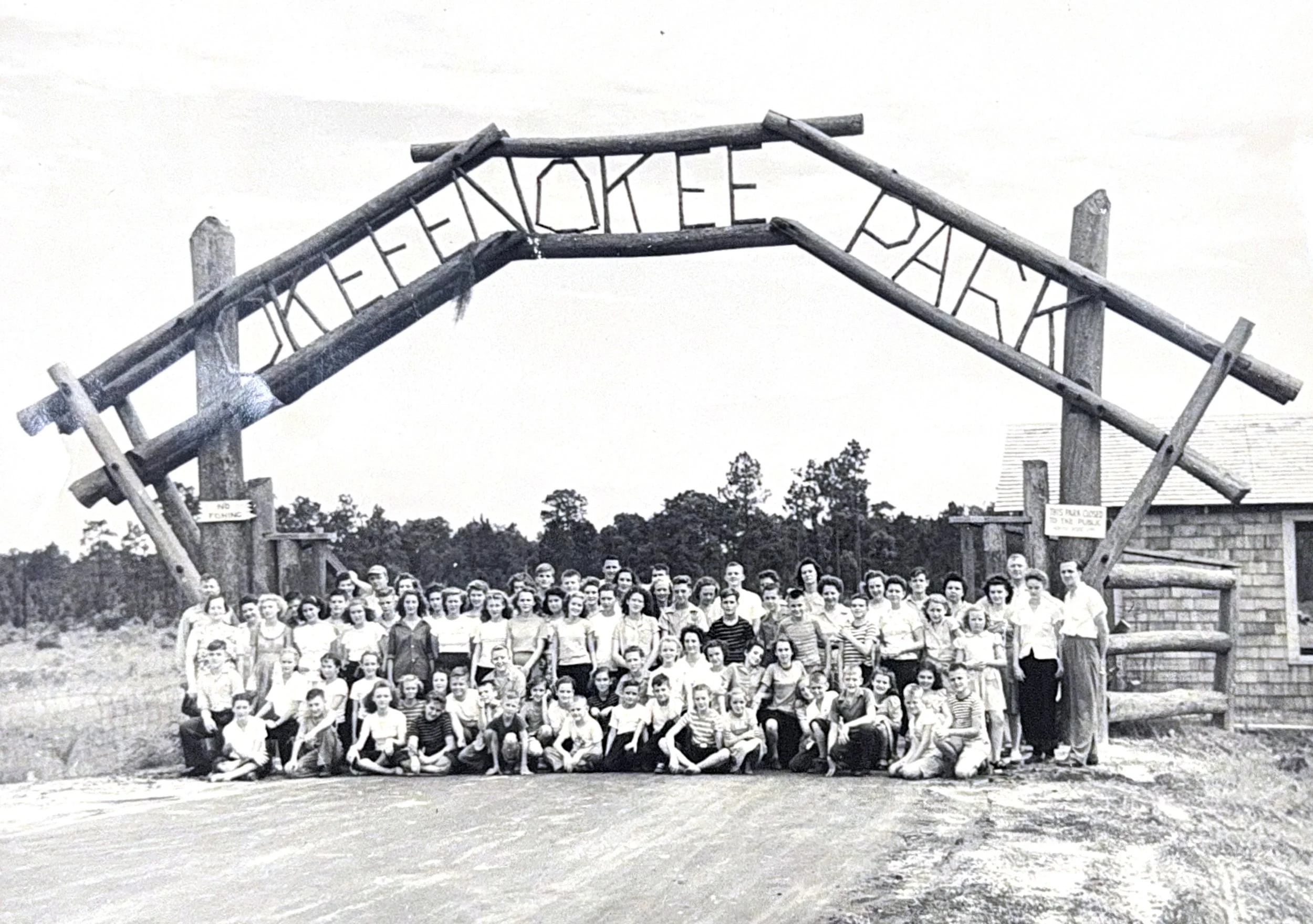
The first school group visits the Okefenokee in 1946.
Coxe Curry & Associates provided campaign planning services to Okefenokee Swamp Park, supporting its work toward UNESCO World Heritage designation and fundraising efforts for a new nature center. Visit okeswamp.org to learn more about the organization.